

Resistance Welding Issue: Non-Round Welds
Definition
A non-round weld is one in which the weld nugget or weld button is not circular in cross-section. Any deviation from a round nugget shape is considered a non-round weld condition.
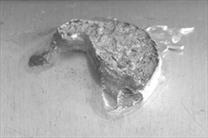
Description
Non-round welds typically result from one of three root cause categories: worn or improperly selected electrode tips, misaligned welding equipment, or insufficient weld energy. Before assuming a cause, reference your applicable company or customer standards — some non-round conditions may fall within acceptable tolerance depending on the application and specification.
It is worth noting that non-round welds do not always produce a visually obvious electrode impression. A weld can appear normal on the surface while the nugget beneath is non-round, which makes systematic inspection — not just visual — essential.
Detection
Non-round welds can be identified through two inspection methods:
Before teardown, look for a non-circular or uneven electrode impression on the workpiece surface. An asymmetrical or irregular indentation pattern is a reliable early indicator, though a clean-looking impression does not rule out a non-round condition underneath.
After teardown, the shape of the remaining weld button confirms the nugget geometry. A non-circular button is a definitive indication.
Significance
Non-round welds affect quality compliance first — most automotive and metalforming specifications define minimum nugget diameter as a circular measurement, so a non-round nugget may fail dimensional requirements even if it appears structurally adequate.
Secondary effects include: increased maintenance burden from accelerated electrode wear (non-round contact geometry degrades tips faster than uniform round contact), reduced throughput if parts are being pulled for rework or re-inspection, and potential workplace safety concerns if expulsion or spatter accompanies the non-round condition.
Recurrent non-round welds on a specific gun or station are a reliable indicator that equipment maintenance is overdue — particularly inspection of the gun arm, pivot points, and electrode alignment.
Subordinate Causes
Strong Possibilities
- Dirty material
- Electrode faces not parallel to workpiece
- Electrode skidding/sliding
- Electrode wear
- Excessive sealer
- Inadequate electrode alignment
- Incorrect cylinder
- Incorrect electrode dressing
- Incorrect test procedure
- Poor electrical connections
- Poor or varying part fit-up
- Shunting of gun or parts
- Weld current low
- Weld time short
- Wrong tips
Weak Possibilities
- Damaged part
- Incorrect material/coating
- Incorrect workpiece selected
- Poor electrode follow-up
- Wrong cable/shunts
- Wrong shank
- Wrong transformer
Note: Also see Mislocated/Edge Welds.